Introduction
A fence that looks like wood but never rots. Stone that never needs repointing. Brick that doesn’t fade, splinter, or warp after a decade in the sun.
That’s the pitch for decorative concrete fencing — and when it’s done right, it delivers. When it’s not, you get a fence that looks like a parking structure barrier dressed up with a stamp pattern.
The difference comes down to how the texture is made, the material behind it, and whether the system is engineered to hold up over years of weather, soil movement, and UV exposure.
This guide covers the main styles of decorative concrete fencing, what makes them worth the investment, how they compare to alternatives, and what separates a quality precast system from one that looks good in a brochure.
What Is Decorative Concrete Fencing?
Decorative concrete fencing is precast concrete — cast in a controlled plant environment — with surface textures that replicate natural materials like wood, stone, or brick. The texture is built into the mold, not applied after the fact. Every panel comes out of the mold with that finish already formed.
This matters because:
- The texture is structural, not cosmetic. It doesn’t peel, chip, or wash off.
- Every panel is identical. Consistent color and pattern are achievable at scale in a way that natural materials aren’t.
- The concrete itself provides the durability. The texture is the aesthetic layer on top of a material that’s engineered to last.
Most decorative precast fence systems consist of panels, posts, rails, and caps — all cast separately and assembled on-site. The modular design allows different textures to be combined, and individual components can be replaced if damaged without tearing out an entire run.
Decorative Concrete Fence Styles
Woodgrain
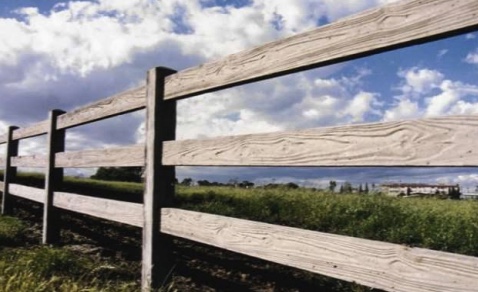
Woodgrain concrete is one of the most popular finishes in residential and HOA applications. The horizontal or vertical plank pattern reads as wood from a distance and close up — without the maintenance liability.
A well-tooled woodgrain mold transfers fine grain detail, natural-looking plank variation, and realistic shadow lines between boards. The result is a fence that reads as wood in context, even if you know intellectually it’s concrete.
Where woodgrain earns its value: communities that want a warm, residential aesthetic without ongoing painting, staining, or board replacement cycles. A wood fence in a humid climate needs serious maintenance every few years. A woodgrain concrete fence doesn’t.
Stone
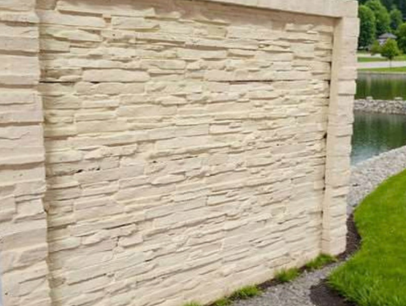
Stone-finish concrete fencing is the standard choice for high-end residential, commercial property perimeters, and anywhere a substantial, permanent look is the goal.
Patterns range from irregular fieldstone — with varied face sizes and natural-looking irregular joints — to cut stone, which has clean edges and a more formal appearance. Some systems offer a combination of both, with larger cut stone panels alongside irregular accent sections.
Stone patterns read well at scale. A 200-foot run of stone-finish concrete fence has the same visual weight as a masonry wall at a fraction of the cost and installation time.
Brick
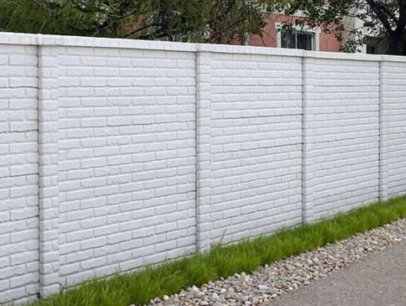
Brick-finish precast uses coursed patterns with consistent joint lines to replicate traditional brick construction. The key quality indicator here is joint definition — shallow or soft-edged joints look stamped, while deep, sharp joints read as real masonry.
Brick-pattern concrete fence is common in commercial applications where the surrounding architecture uses brick, and in residential communities with traditional or colonial-style homes where masonry is the standard visual reference.
Ledgestone
Ledgestone is a stacked horizontal stone pattern with varied face heights and a strong shadow line between courses. It’s a modern, architectural finish that works across residential, commercial, and mixed-use applications.
The visual appeal is the depth of the texture. Ledgestone reads dramatically differently depending on light angle — in morning or late afternoon sun, the shadow lines create strong horizontal banding that adds visual interest. Flat light softens the contrast.
For property owners who want something that looks custom and substantial without reading as traditional, ledgestone is the pattern that bridges those requirements.
Decorative Concrete Fence vs. Other Materials
vs. Wood
Wood fencing requires painting or staining every 2 to 5 years, periodic board replacement as rot and warping set in, and has a finite lifespan — especially in climates with significant moisture or temperature cycling.
Decorative concrete doesn’t rot, warp, or need surface treatment. The maintenance requirement across a 20-year ownership horizon is close to zero. The upfront cost is higher. The lifecycle cost is lower.
vs. Vinyl
Vinyl fencing is low-maintenance and comes in a range of styles, but it’s a fundamentally different visual category from concrete. It looks like vinyl. In applications where property value and neighborhood aesthetics matter, vinyl doesn’t carry the same weight as a masonry-look material.
Vinyl is also susceptible to impact damage and UV degradation in hotter climates. Concrete isn’t.
vs. Masonry (Block, Brick, Stone)
Real masonry construction is expensive, slow, and requires skilled labor that’s increasingly hard to find. A precast concrete fence system can be installed in a fraction of the time at significantly lower cost, while delivering a comparable visual result.
The trade-off is that precast requires good site prep and proper post setting — it’s not a DIY project — but neither is building a real masonry wall.
vs. Aluminum and Steel
Metal fencing offers security and a clean line, but it doesn’t provide privacy or sound attenuation. Decorative concrete fence does both. For applications where the goal is to define a perimeter visually and functionally, a solid panel system outperforms an open metal fence in nearly every respect.
Where Decorative Concrete Fencing Makes Sense
Residential Communities and HOAs
High-volume residential developments and HOA-managed communities are the largest market for decorative precast fence systems. The economics work: consistent appearance across hundreds of linear feet, low maintenance burden across the community’s budget, and durability that outlasts the product warranties of every alternative.
HOA fence replacements are expensive and disruptive. A concrete system installed correctly is a long-term solution, not a maintenance item.
Commercial Property
Commercial property perimeter fencing serves two purposes: security and curb appeal. A stone or ledgestone concrete fence accomplishes both without looking institutional. It also holds up to vehicle impact, vandalism, and weather better than lighter materials.
Retail centers, office parks, multifamily residential, and hospitality properties all use decorative concrete fence to define boundaries while reinforcing property character.
Sound Attenuation Walls
Decorative concrete systems are used as noise barrier walls along highways, transit corridors, and adjacent to commercial or industrial properties. The concrete mass provides genuine sound attenuation, and the decorative face turns a functional barrier into something that reads as an architectural element rather than a noise wall.
Agricultural and Rural Properties
For large acreage, decorative concrete fencing along road frontage defines property character and handles the physical demands of rural environments — vehicle exposure, livestock pressure, soil movement — that would compromise lighter materials within a few seasons.
What Determines Quality in Decorative Precast Concrete Fence
Texture Depth and Fidelity
The defining quality variable in a decorative concrete fence is how well the texture transfers from the mold to the panel surface — and how consistent that transfer is across every panel in the run.
A mold that produces crisp, deep texture on panel one should produce the same result on panel one thousand. If it doesn’t, you get visual inconsistency across the fence run. Individual panels stand out. The system reads as manufactured rather than designed.
High-quality precast molds are engineered to hold texture detail across thousands of production cycles. That engineering is what separates a fence system that looks consistently right from one that looks right initially and drifts over time.
Double-Sided Panels
Better precast fence systems cast panels with texture on both faces simultaneously. This means the fence looks finished from both sides — from inside the property and from the street. Single-sided panels present a smooth back face to one side, which degrades the visual result in any application where the fence is visible from multiple directions.
Double-sided casting is more complex to execute well. It’s a meaningful quality differentiator when you’re comparing systems.
Dimensional Consistency
Panels, posts, and rails need to fit together. If dimensional tolerances drift across a production run, field installation problems compound. Gaps appear in panel-to-rail interfaces. Posts don’t plumb correctly. The fence that looks right in the spec sheet looks wrong in the ground.
Ask manufacturers about their dimensional tolerances and quality control process. The answer tells you how seriously they take production consistency.
Post Caps and Finishing Details
The post cap is a small component with an outsized effect on perceived quality. A cap with sharp definition, clean corners, and a finished top profile reads as intentional. A cap with soft edges, pulled corners, or surface voids downgrades the visual finish of the entire installation.
The same logic applies to rail profiles and transition pieces. A fence system is only as refined as its least refined component.
Color in Decorative Concrete Fencing
Precast concrete fence panels are typically cast in a base concrete color — gray, buff, tan, or a custom integral color — with texture added by the mold. Some manufacturers offer additional finishing options:
- Integral color — pigment mixed into the concrete before casting. Consistent color through the full depth of the panel, which means chips and surface wear don’t expose a different-colored core.
- Acid staining or painting — surface-applied color treatments that add depth or accent texture. Requires more maintenance than integral color over time.
- Natural gray — uncolored concrete takes on the color of the cement and aggregate mix. For stone and masonry patterns, this often reads naturally; for woodgrain, integral color usually improves the result.
Color selection should be coordinated with the surrounding built environment. A fence that reads correctly against a warm-toned home exterior may not work against a gray or white facade.
Frequently Asked Questions
How long does a decorative concrete fence last?
A properly installed precast concrete fence system will outlast most other fencing materials — 30 to 50 years is reasonable for a well-engineered system in normal conditions. The concrete itself doesn’t degrade significantly with weather exposure, and the texture is structural rather than applied.
Does decorative concrete fencing require maintenance?
Minimal. Occasional cleaning to remove surface debris, mildew, or staining is standard. Some owners apply a concrete sealer every several years to reduce water absorption and maintain color vibrancy. There’s no painting, staining, or structural maintenance required.
Can decorative concrete fence panels be replaced individually?
Yes. Precast systems are modular. If a panel is damaged, it can be removed and replaced without disturbing adjacent sections. This requires that the original manufacturer is still producing the same panel configuration — a reason to choose an established supplier.
How does decorative concrete handle freeze-thaw cycles?
Precast concrete engineered for exterior use is designed to withstand freeze-thaw cycling. The key is water-to-cement ratio in the mix design and proper curing. A quality precast manufacturer controls both variables. Lower-quality systems with higher water content are more susceptible to spalling in harsh climates.
What’s the difference between stamped concrete and precast decorative concrete?
Stamped concrete is poured in place and textured with stamps before it cures. It’s used primarily for flatwork (patios, driveways) and isn’t a practical option for vertical fence systems. Precast decorative concrete is cast in a mold in a controlled plant environment, which produces more consistent results and is engineered for structural performance as a fence panel.
Is decorative concrete fence a good investment for resale value?
Generally yes, particularly in communities where curb appeal directly affects property values. A decorative concrete fence with consistent appearance across a development or neighborhood reads as a quality improvement rather than a utility installation.
Conclusion
Decorative concrete fencing works when the texture is right, the system is consistent, and the installation is executed correctly. It fails when any of those variables is wrong — and the failure is permanent and visible from the street.
The product quality starts with the molds. A precast fence system is only as good as the mold it comes from. Texture fidelity, dimensional consistency, and long-cycle performance are engineering questions, not just aesthetic ones.
Elastoquip manufactures precast concrete fence molds used by leading fence producers worldwide. Our systems are engineered for high-volume production of decorative concrete fence panels — woodgrain, stone, brick, ledgestone, and custom patterns — with double-sided texture transfer and cycle life that holds quality across thousands of pours.
If you’re producing decorative concrete fence panels or evaluating a mold system for a new product line, contact us to discuss your requirements.
Elastoquip has supplied precast fence manufacturing systems to leading companies worldwide for over four generations. We engineer molds for production environments where texture quality, output, and cycle life are non-negotiable.