
Do Precast Concrete Molds Require Liners?
A form liner is a separate textured insert placed inside a concrete form. Learn how liner-free molds work, what they save, and what they cost you.
It depends on how the mold is built. Some precast concrete molds require a liner, because the form itself is a plain structural box with no texture on its casting face — the pattern has to come from an insert placed inside it. Other molds are made so the textured surface and the mold are the same object, and no liner is involved at any point. Elastoquip's fence molds are the second kind: liner-free and fully self-contained. Neither approach is universally correct; the choice comes down to how many textures you run and how often you switch between them.
What a concrete form liner actually is
A form liner is a separate insert — typically elastomeric urethane, rubber, or thermoformed plastic — that is placed inside a concrete form to imprint a texture or pattern onto the face of the finished casting. The form provides the shape, the dimensions and the structural rigidity; the liner provides only the surface. They are two distinct products with separate purchase orders, installation steps and replacement schedules.
Liners are well established in architectural precast work. A producer casting sound walls or facade units may keep a rack of liners in a dozen patterns and drop the right one into a general-purpose form for each job. That flexibility is the point of the system.
What running a liner system actually involves
The liner is a consumable in a way the form is not. Each texture you offer is a line item you buy, store, fit and eventually retire, and every cycle carries extra steps a self-contained mold does not have.
- Purchasing the liner separately from the form, in the sizes the panel requires
- Cutting or trimming it to fit the form cavity
- Aligning it so the pattern registers correctly against the panel edges
- Securing it so it cannot shift, float or lift during the pour
- Applying release agent to the liner face as well as the form, and cleaning residue out of the texture between pours
- Inspecting for tears, curling edges and worn detail, and replacing it when the pattern degrades
How liner-free molds work
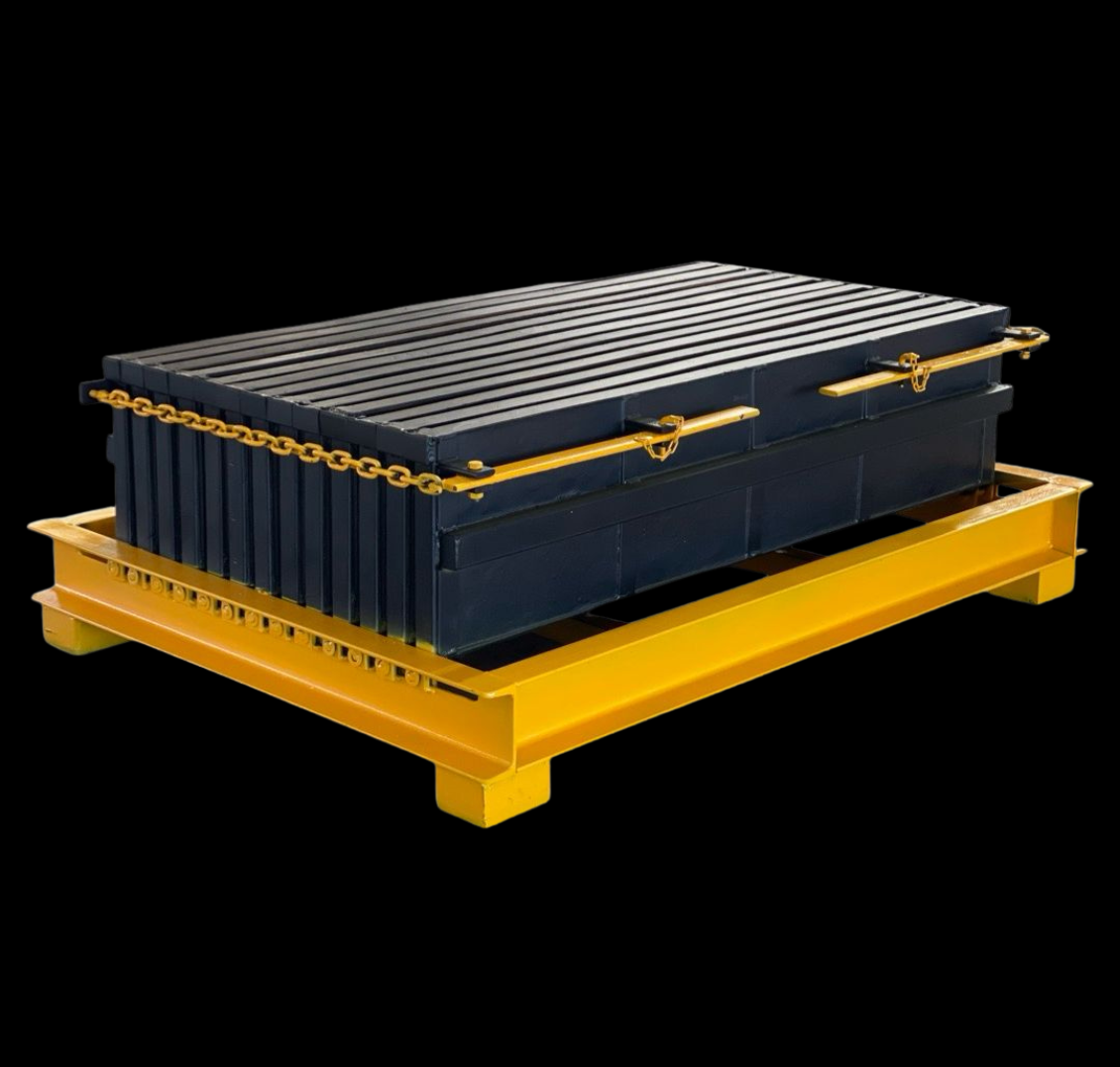
In a liner-free mold, the surface that produces the texture is the mold. There is nothing to insert, align or secure, because the stone, brick or woodgrain relief is part of the mold's own casting face.
Elastoquip builds this as proprietary high-grade urethane encased in a steel framework: the urethane gives the fine texture reproduction of a polyurethane mold, the steel gives the dimensional stability of a steel form. The two functions a form-plus-liner system splits across two products are combined into one. Our mold systems are all built this way, and each one is double-sided — sharp, realistic texture on both faces of every panel, and on all sides of posts, rails and caps.
What changes on the production floor
Removing the liner removes a category of work rather than shaving minutes off one step. Four things change in practice.
Setup time. Prep goes from form-plus-liner to form. There is no fitting, registering or bonding step before the first pour, and no re-registering after a strip.
Alignment error. A misaligned or lifted liner shows up in the finished panel as a pattern running off square, a seam where two liner sections meet, or a bulge where concrete got behind the insert. When the texture is integral to the mold, that failure mode does not exist.
Maintenance. You clean one surface instead of two, and you are not tracking the condition of a wear item living inside the form.
Consumable cost. Liners are a recurring purchase. A liner-free mold has no insert to reorder, which removes an ongoing line item from each texture you produce. Elastoquip describes mold service life as high-cycle longevity, with consistent results pour after pour.
What liner-free costs you
Here is the honest tradeoff, and it is a real one. A liner system lets you change the texture inside a single form by swapping the insert. A dedicated liner-free mold does not: the texture is the mold, so one mold produces one texture, and a second texture means a second mold rather than a second liner.
That has consequences worth weighing. Adding a texture to your catalogue becomes a mold decision rather than a shelf-stock decision, storage is by mold rather than by insert, and a producer sampling many patterns on short, varied runs gets less agility from dedicated molds than from a rack of liners.
Put plainly: liner-free removes the consumable, the alignment step and the second maintenance surface, and gives up the ability to swap textures within one form. Which side of that is worth more depends entirely on your production mix.
When a liner system is still the right call
Liners earn their place where texture variety matters more than cycle simplicity. If your plant does one-off architectural work, changes patterns constantly, or casts few panels per design, keeping one form and rotating inserts through it is genuinely valuable, and the extra setup per pour is a fair price.
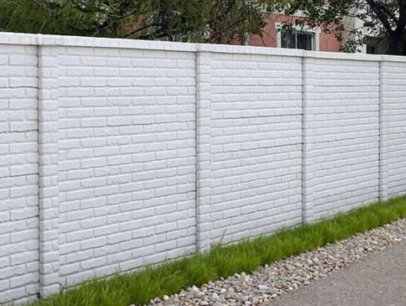
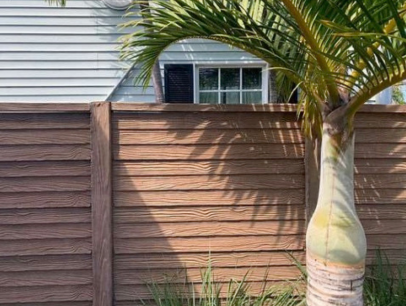
Liner-free moulds suit the opposite profile: repeatable production of a defined set of designs, where the same texture runs over and over and setup time and consumables compound. Fence production usually falls here. A subdivision or HOA job wants uniform panels in one look across a long run, which is exactly where a dedicated textured mold pays back and a swappable liner adds work without adding value. Our fence designs cover eight textures across brick, stone, woodgrain, ledgestone, smooth and ranch rail categories, each with its own mold.
How liner-free molds fit into a production line
The urethane faces are built for wet cast production, so fine stone, brick and woodgrain detail comes straight off the mold surface. Standard precast mixes work — no special mix is required to get the detail — and we can recommend ideal aggregates and strengths for the parts you are casting.
The range covers the full fence assembly, not panels alone: a 12-Panel Gang Mold casting twelve panels per cast, a Post & End Post Mold for standard and terminal posts, a Post Cap Mold, and a Panel Rail Mold built to tight tolerances. Where a part needs maximum rigidity and cast life instead of fine surface relief, we build steel moulds for precast concrete, and the team helps match form material to the part.
If you are comparing approaches for a specific product line, the FAQ covers setup and mix questions in more detail. Or send your drawings and production targets when you contact us, and we will advise on mold configuration, concrete mix and cycle targets.
Frequently asked questions
Do precast concrete fence molds require liners?
Not necessarily. A mold requires a liner only when its casting face has no texture of its own, in which case a separate insert must be fitted inside the form to imprint the pattern. Liner-free molds, including Elastoquip's, carry the texture on the mold surface itself, so no insert is bought, aligned or replaced.
What is a concrete mold liner?
A concrete mold liner, also called a form liner, is a separate elastomeric or plastic insert placed inside a concrete form to imprint texture or pattern onto the face of the casting. The form supplies the shape and structure while the liner supplies only the surface. The two are bought, installed, cleaned and replaced separately.
Are form liners worth it?
They are worth it when texture variety matters more than cycle simplicity, because one form plus a rack of liners can produce many different patterns. They are worth less when you run the same texture repeatedly, since every pour then carries the fitting, alignment, cleaning and eventual replacement of a consumable you did not need.
What is the downside of a liner-free mold?
You cannot change the texture within a single mold. Because the textured surface and the mold are one object, each texture requires its own dedicated mold rather than a swappable insert, so adding a pattern to your catalogue is a larger step and storage is by mold rather than by liner.
Does a liner-free mold need a special concrete mix?
No. Standard precast mixes work with Elastoquip's molds, which are built for wet cast production so that fine stone, brick and woodgrain detail comes straight off the mold surface. Elastoquip can recommend ideal aggregates and strengths for the specific parts being cast.
Talk to our team
Send us your panel design, production volume and cycle targets and we will recommend a mold configuration and concrete mix to match. Or browse the full mold system range and fence designs.
Contact Elastoquip