
Urethane vs Steel Molds for Precast Concrete
Urethane molds reproduce fine texture, steel molds hold dimension. Compare detail, weight, repair and cast life before you buy precast concrete forms.
The difference is a single, well-understood tradeoff: urethane reproduces fine surface texture that steel cannot practically match, while steel holds dimension and resists abuse that urethane cannot match. Urethane is a cast elastomer, so it picks up every detail of the master pattern and flexes off the finished part. Steel is a fabricated structural metal, so it stays flat, square and rigid under vibration and fill pressure. Below is what each does well, what each does badly, and how Elastoquip's mold systems resolve it.
The short answer: texture versus rigidity
Urethane is poured in liquid form against a master pattern and cured. Because it forms itself to the pattern rather than being cut to shape, it captures detail at a scale steel tooling cannot economically reach: the cleft of a stone face, the grain of timber, the recessed mortar joint between bricks.
Steel is cut, rolled, welded and ground. That process is excellent at flat planes, true angles and repeatable dimensions, and the finished form resists deflection under vibration and fill pressure. What it is not good at is fine random texture, which has to be machined, etched or added as a separate liner.
Neither material is better in the abstract. The right question is which property the part is asking for: a decorative face, or a controlled dimension.
Why urethane holds detail better
Urethane reproduces fine texture because it is cast rather than fabricated, and it releases that texture because it is elastic. A rigid form must be built with draft so the part pulls straight out. A urethane face flexes slightly during stripping, so texture with real relief and mild undercuts survives demolding instead of being torn off the concrete.
That elasticity is also why urethane suits wet cast work specifically. Elastoquip's urethane faces are built for wet cast production, where fine stone, brick and woodgrain detail comes straight off the mold surface with no stamping or applied finish. The eight fence textures in the range are produced this way on both faces of the panel.
The cost of that elasticity is stiffness. Unsupported urethane deforms under load, and a form that deforms will not hold a panel thickness to tolerance. Elasticity is a feature at the surface and a liability in the structure.
Why steel holds dimension better
Steel wins on rigidity, and rigidity is what produces dimensional consistency pour after pour. A steel form does not bow when a panel is vibrated, does not spread when it is filled, and does not creep out of square as the day goes on. That matters most where parts have to fit each other: posts, rails and wall thickness.
Steel also absorbs the abuse of a production floor better than any elastomer. Screed bars, dropped rebar and aggressive cleaning are routine, and steel tolerates contact that would cut or gouge a bare urethane face.
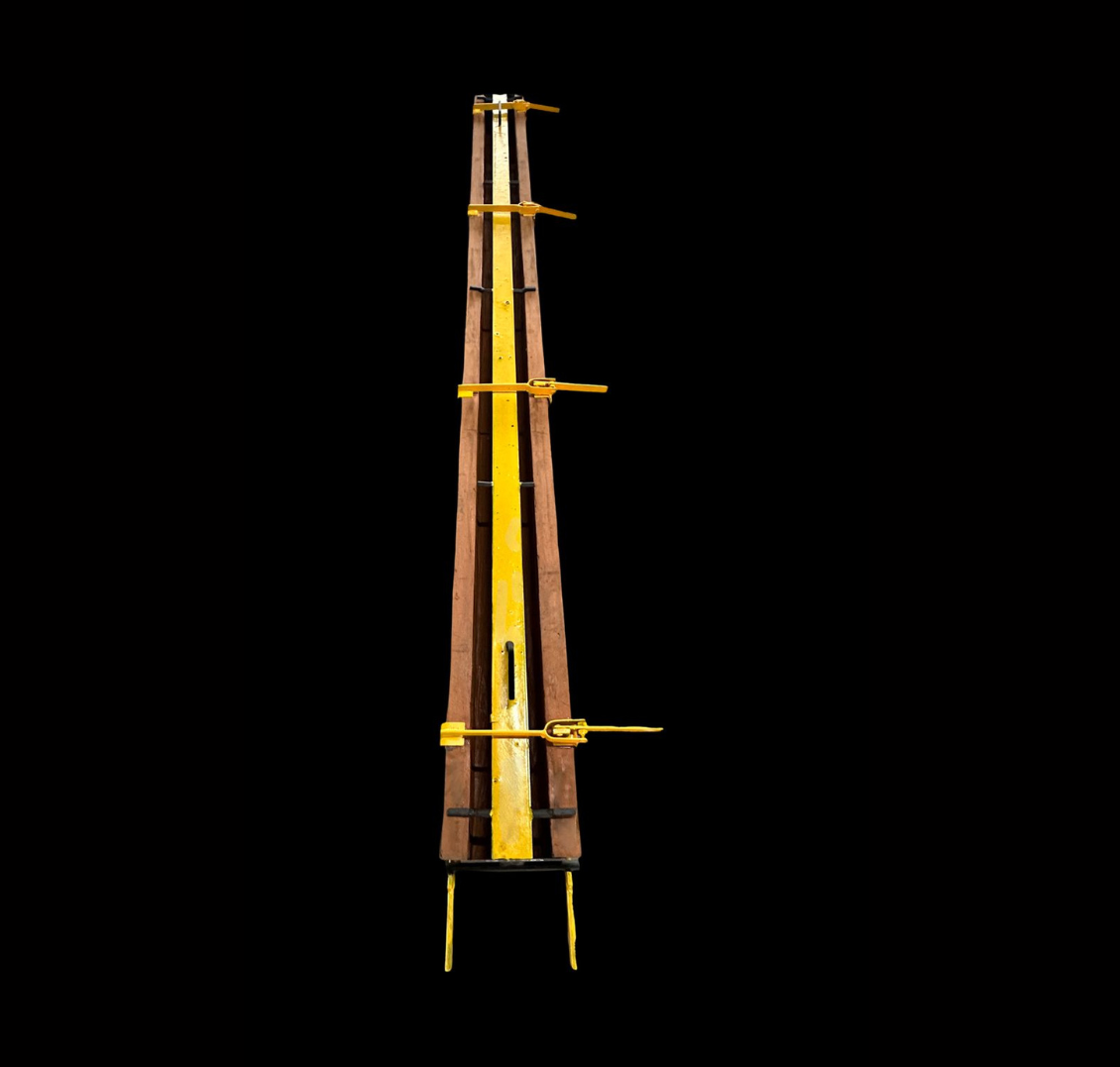
This is why several parts in the Elastoquip range are reinforced steel systems. The Post & End Post Mold is a steel mold system because consistent wall thickness on standard and terminal posts is a dimensional problem, not a texture problem.
Urethane vs steel molds: side by side
The table below is the practical version of the tradeoff. Read it by part type, not by preference.
- Fine texture reproduction — Urethane: excellent, picks up stone, brick and woodgrain detail directly from the master pattern. Steel: limited, texture must be machined, etched or supplied by a separate liner.
- Dimensional stability — Urethane: poor unsupported, the material flexes under load. Steel: excellent, holds flatness, squareness and section under vibration and fill pressure.
- Undercuts and draft — Urethane: tolerates relief and mild undercuts because the face flexes off the part. Steel: requires draft, the part must pull straight out of a rigid cavity.
- Demolding — Urethane: releases easily, the elastic face helps break the bond. Steel: relies on release agent, draft and mechanical stripping.
- Weight and handling — Urethane: lighter for the same face area, easier to reposition by hand. Steel: heavy, usually needs lifting equipment on larger forms.
- Damage mode — Urethane: cuts, tears and gouges from tools and rebar. Steel: dents, weld cracking, and rust where the coating is lost.
- Repair — Urethane: surface damage can sometimes be filled, but a torn texture rarely returns to as-new. Steel: repairable in place by a competent welder or fabricator.
- Best fit by method — Urethane: wet cast decorative faces where surface finish is the deliverable. Steel: structural, tight-tolerance parts where geometry is the deliverable.
- Where the cost sits — Urethane: driven by the master pattern and the volume of material in the face. Steel: driven by fabrication labor and welding time.
Weight, handling and repairability on the floor
Steel moulds for precast concrete get heavy quickly as face area grows, and on larger forms that means a crane or hoist in the cycle. Urethane is lighter for the same face area, which shortens setup and stripping.
Repairability runs the other way. Steel damage is usually a welding job and the form goes back into service. Urethane damage is a surface problem: a deep cut or torn texture is hard to return to as-new, because the value of the face is that it copies a master pattern faithfully.
How the form is built matters as much as what it is made from. A separate liner adds one more thing to align, clamp and replace. Elastoquip molds are liner-free and fully self-contained, so the surface producing the texture is the mold itself.
What actually determines cast life
Ask a supplier how many casts a mold will give and the number means little on its own, because cast life is set by how the form is run rather than by the material alone. The variables that decide it are stripping technique, release agent compatibility, vibration energy, mix abrasiveness, cleaning tools, storage between runs, and whether the working face is protected by a rigid structure.
The material sets the failure mode, not the number. A steel form typically degrades slowly through dents, distortion and coating loss. A urethane face degrades through surface wear and cuts, which show up in the casting long before the form is unusable.
Elastoquip describes its molds in terms of high-cycle longevity and consistent results pour after pour. The honest way to size a purchase is to talk through your mix, cycle time and handling method, which the FAQ covers.
The hybrid answer, and when full steel is still right
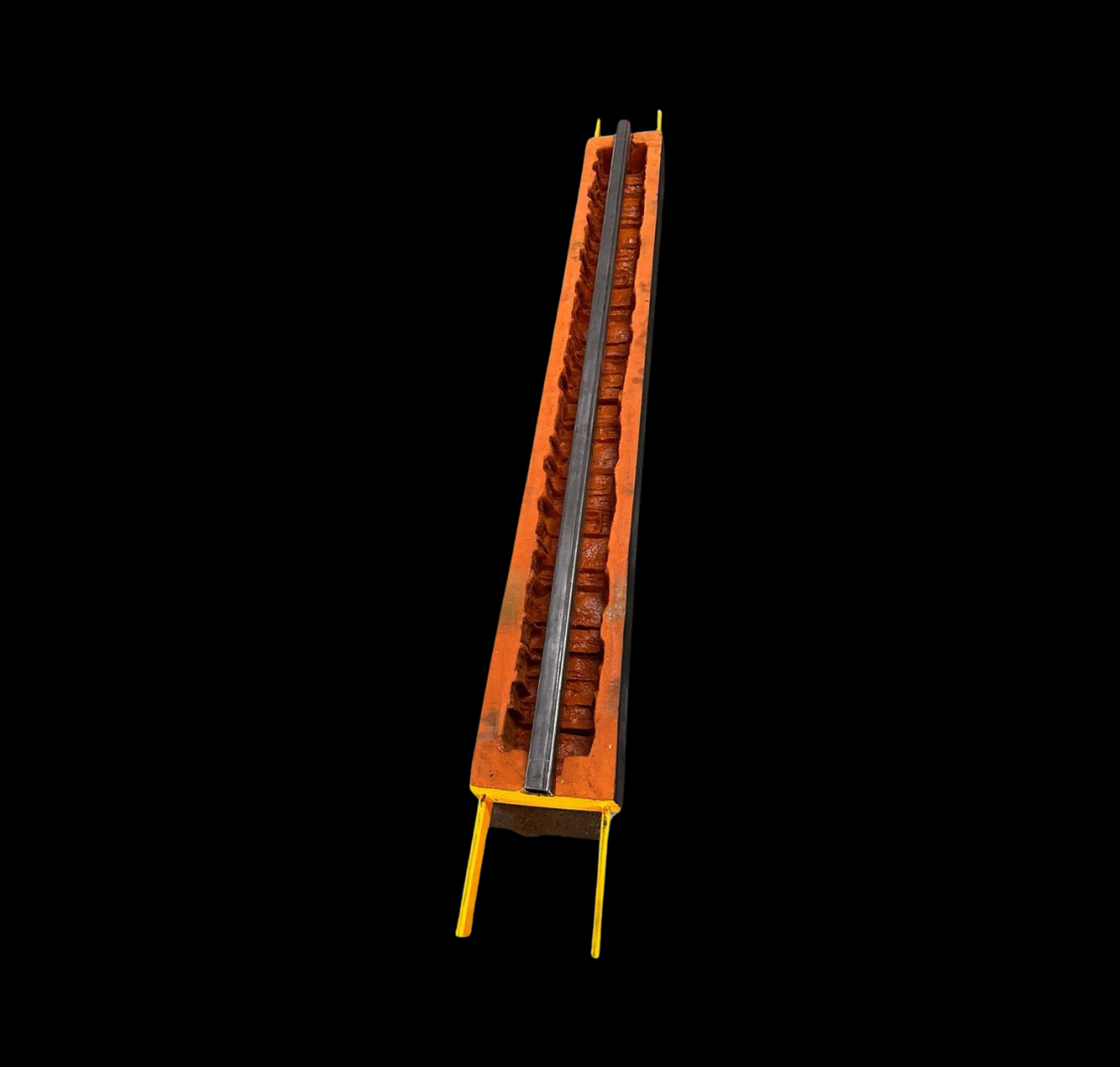
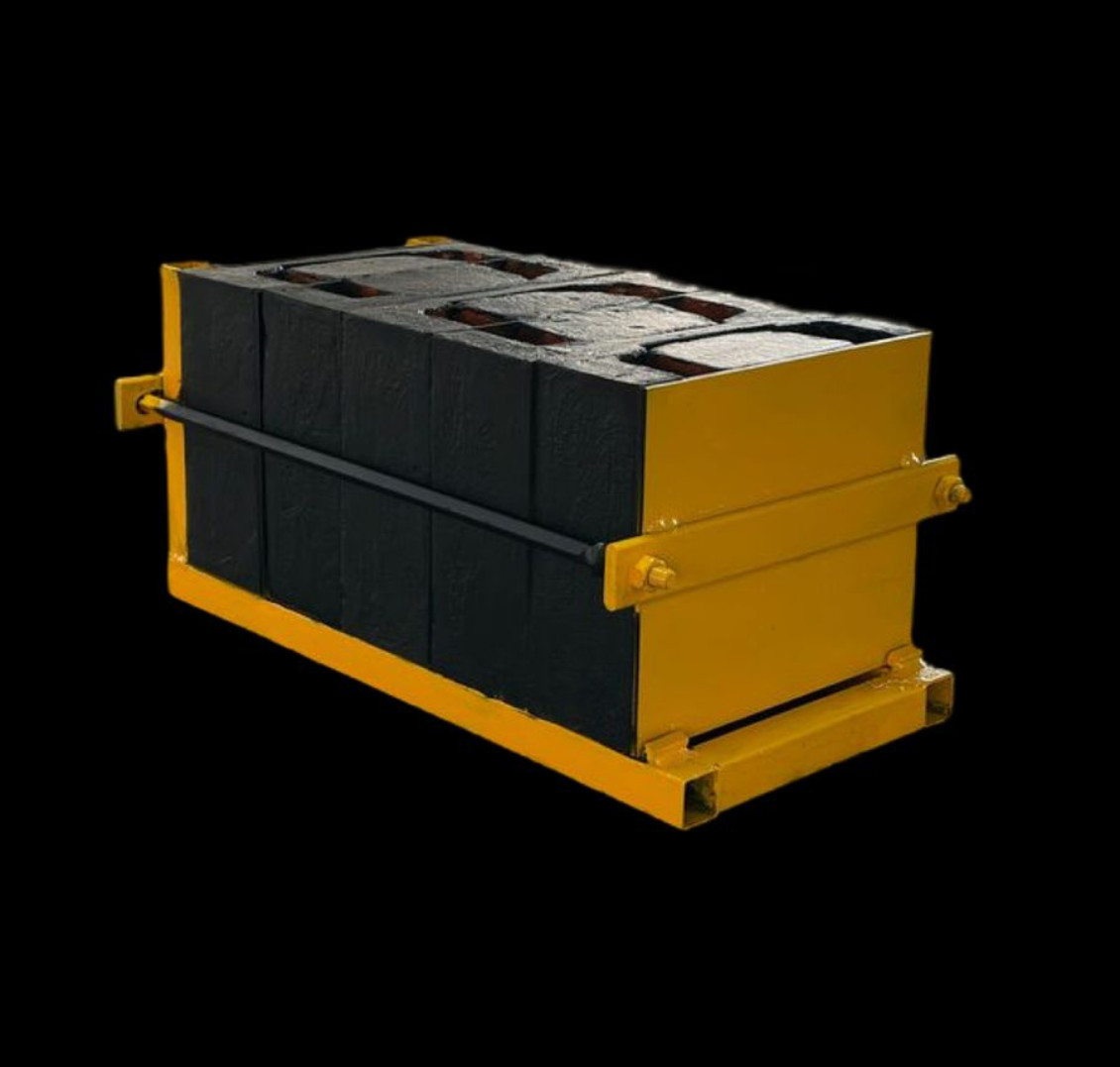
If urethane wins on texture and steel wins on stability, the engineering move is to use each material for the job it is good at. That is what Elastoquip molds do: a proprietary high-grade urethane face encased in a steel framework. The urethane gives the fine texture reproduction of a polyurethane mold, and the steel framework gives the dimensional stability unsupported urethane lacks.
In practice the texture is on both faces of every panel and on all sides of posts, rails and caps, while the steel structure carries the load and keeps the section true. There is no separate liner in the system to align or replace as a consumable.
The hybrid is not the answer to everything. Where a part needs maximum rigidity and cast life instead of a decorative surface, Elastoquip builds full steel moulds for precast concrete, and the team matches form material to the part rather than pushing one construction at every job. If you are weighing the two for a specific part, send the drawing and get an opinion on mold configuration, concrete mix and cycle targets.
Frequently asked questions
What's the difference between urethane and steel molds for precast concrete?
Urethane is a cast elastomer that reproduces fine surface texture from a master pattern and flexes during demolding, so it holds stone, brick and woodgrain detail that steel cannot practically match. Steel is a fabricated structural metal that stays flat, square and rigid under vibration and fill pressure, so it holds dimensional tolerances better. The tradeoff is texture quality versus dimensional stability.
Which mold material holds detail better?
Urethane holds fine detail better, because it is poured against a master pattern rather than cut to shape, so it copies surface relief exactly. Its elasticity also lets textured faces with mild undercuts release from the concrete without chipping. Steel can carry texture only if it is machined, etched, or fitted with a separate liner.
Should I use polyurethane or steel molds for precast fence panels?
Choose by what the part is being judged on. If the deliverable is a realistic decorative face in wet cast production, a urethane face is the right call; if it is a structural section with tight tolerances, such as a post or rail, steel is. Many producers use a hybrid mold with a urethane face encased in a steel framework so they get both.
Do urethane precast molds need a separate liner?
Not necessarily. Some systems use a urethane liner dropped into a separate form, which adds a component to align, clamp and eventually replace. Elastoquip molds are liner-free and fully self-contained, meaning the surface that produces the texture is the mold itself.
How many casts will a precast concrete mold last?
There is no single reliable number, because cast life is determined by how the mold is run rather than by the material alone. Stripping technique, release agent compatibility, vibration energy, mix abrasiveness, cleaning method and storage all change the answer significantly. What the material does determine is the failure mode: steel degrades through dents and distortion, while a urethane face degrades through surface wear and cuts.
Talk to our team
Send us your panel design, production volume and cycle targets and we will recommend a mold configuration and concrete mix to match. Or browse the full mold system range and fence designs.
Contact Elastoquip