
Wet Cast Concrete for Decorative Fence Panels
Wet cast concrete is a fluid, vibrated mix that flows into fine mold detail. How slump, water-cement ratio, aggregate and curing drive panel finish.
Wet cast concrete is a fluid, measurable-slump mix poured into a mold and consolidated by vibration, and it is why a decorative fence panel can carry crisp stone clefts, brick arrises and woodgrain straight off the mold face. Dry cast, by contrast, is a near zero-slump mix compacted by machine pressure, and it cannot flow into fine relief. Once you choose wet cast, four things decide whether the finish is sharp or patchy: mix, consolidation, release agent, cure. Elastoquip's mold systems use urethane faces built for wet cast production.
Wet cast vs dry cast: what actually separates them
Dry cast, also called zero-slump or machine-cast concrete, carries only enough water to hydrate the cement. It is compacted in a machine form by high-frequency vibration plus pressure, holds its shape the moment compaction stops, and is stripped immediately so the form is reused within minutes. Wet cast carries enough water and admixture to flow, so it is poured, vibrated, then left in the mold until it gains green strength, usually overnight or a few hours with heat.
Dry cast output is limited by machine speed; wet cast output is limited by how many molds you own, because one mold gives one cast per cycle. Wet cast buys detail, surface density and color consistency at the cost of mold inventory and cycle time. Dry cast buys throughput and leaves an open, granular surface with visible aggregate.
Why wet cast panels hold finer detail
Reproducing fine detail is a flow problem, not a strength problem. A tooled mortar joint may be two to four millimetres wide and woodgrain relief under a millimetre; paste must reach into that negative and displace the air before the mix stiffens.
A zero-slump mix has no mobile paste. Compaction only rearranges particles, so aggregate bridges a narrow crevice and leaves a void beneath, giving a rounded, softened version of the detail. A wet cast mix temporarily liquefies under vibration instead: paste wets the whole mold face and entrapped air rises out of the recesses rather than being sealed into them.
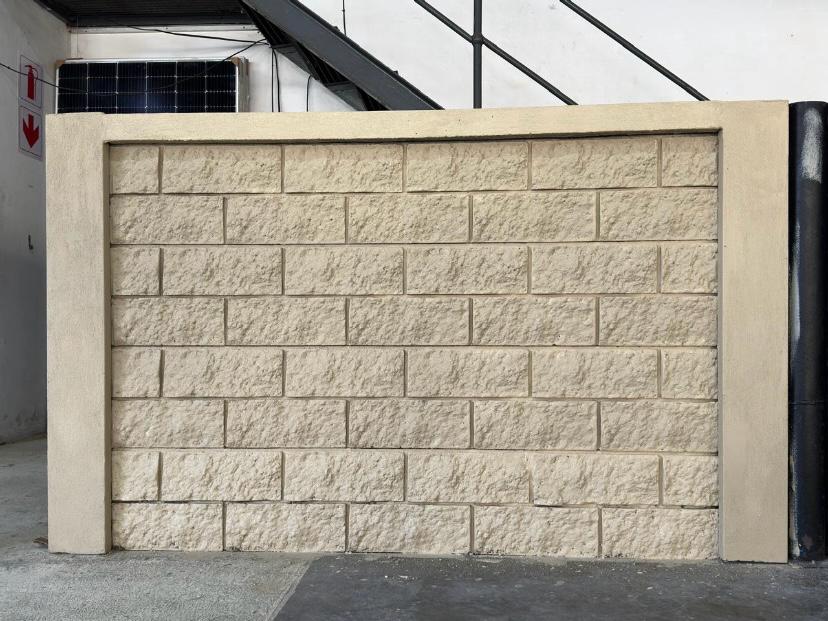
The mold face matters as much as the mix. Cast urethane reproduces relief at a scale machined steel cannot practically reach, and it flexes on stripping so texture and mild undercuts release without chipping. Elastoquip encases that urethane in a steel framework, so the frame holds dimension while the urethane carries the detail on all eight fence design textures, with no separate liner.
The mix: what works for decorative wet cast panels
Elastoquip's position is that standard precast mixes work and no special formulation is required, and the team can recommend suitable aggregates and strengths. The ranges below are general industry practice, not an Elastoquip specification, and any mix must be validated against your own materials with trial casts.
Water-cement ratio is the most influential single number, because it sets strength, permeability and surface density together. Raising it buys workability but costs compressive strength and leaves a chalkier, lighter, more variable surface as excess water bleeds toward the mold face. Buy workability with admixture, not water: adding water to a stiff mix costs strength, shifts color and increases bleed and efflorescence.
- Water-cement ratio, general practice: roughly 0.38 to 0.45 by mass, lower for a denser, less permeable surface.
- Slump, general practice: roughly 100 to 150 mm (4 to 6 in) for vibrated decorative faces, or a flowable self-consolidating mix where relief is deep.
- Cementitious content is normally raised, and part-replaced with fly ash or slag, to increase paste volume and reduce free lime available for efflorescence.
Aggregate size and grading against texture depth
The rule is dimensional: the largest aggregate particle must be small relative to the smallest feature the panel has to reproduce. If a tooled mortar joint is four millimetres wide, a twenty-millimetre stone cannot enter it, and every joint will be bridged and voided. General practice for heavily textured faces caps nominal top size near 10 mm (3/8 in), dropping to 6 mm where relief is very fine.
Sand grading matters as much as top size. A gap-graded sand cannot hold the coarse fraction in suspension, so the mix bleeds, water channels toward the mold face, and the panel shows sand streaking and mottled color.
Consolidation: where detail is won or lost
For a thin decorative panel, external vibration through the form or casting table is generally preferred over an internal poker, which cannot reach the mold face without touching it and leaving visible trails. High-frequency, low-amplitude vibration moves paste and air, which is what fine texture needs; low-frequency, high-amplitude vibration moves coarse aggregate, which is what a thick structural section needs.
Under-vibration leaves air trapped against the mold face, producing bugholes and, at worst, honeycombing where paste never surrounded the aggregate. Over-vibration segregates the mix: aggregate sinks, water and paste rise, and the surface layer is left weak, chalky and prone to crazing. Vibrate each layer until the surface just closes and air release stops.
Release agents and mould preparation
Release agent is one of the largest single causes of surface defects. Barrier agents, usually oil or wax based, sit between concrete and form; reactive agents react with free lime to form a thin film and generally give a cleaner architectural surface. The agent must go on thin and even, with pooling in texture recesses wiped out, because pooled release agent traps air and blocks paste exactly where the detail is deepest.
Compatibility is not optional: some solvent-carried agents swell or attack elastomeric urethane, shortening tooling life and degrading the texture. Where a part needs rigidity rather than fine texture, Elastoquip also builds steel moulds for precast concrete, which tolerate a wider range of release chemistry. Keep the mould face clean: cured residue in a texture recess reproduces itself on every panel.
Curing and color consistency
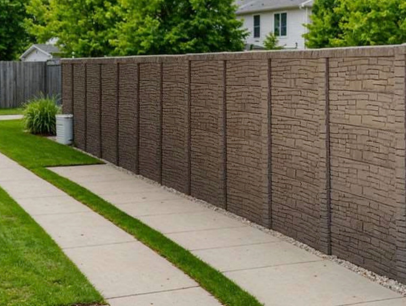
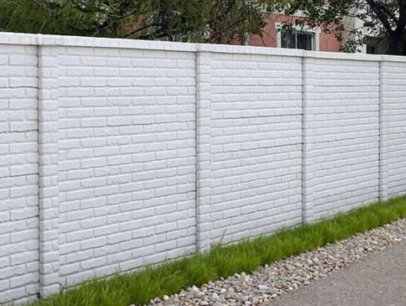
Color variation across a fence run is usually a process problem, not a pigment problem. The same mix cured at different temperatures or humidities, or stripped at different ages, comes out in visibly different shades, because the rate of surface hydration changes how the surface reflects light. Hold one cure schedule and one stripping age, and never cure part of a run in direct sun.
Curing also governs efflorescence. Free lime released during hydration is carried to the surface by moisture and deposits as a white carbonate bloom on drying. Moist curing, a lower water-cement ratio, supplementary cementitious materials, and dry covered storage rather than wet stacking all reduce it.
Common wet cast defects and their causes
Almost every panel defect traces to one of five mechanisms: trapped air, insufficient paste, water movement, differential hydration or surface drying.
If a defect survives mix and process corrections, inspect the mold: worn or residue-loaded texture reproduces its own condition on every cast, and the production FAQ covers setup and demolding. Elastoquip provides guidance on mold setup and concrete mix recommendations, drawing on four generations of mold-building experience. Send the team your panel dimensions, target texture and output goal, then validate the mix with trial casts.
- Bugholes (small round surface voids) form when air is trapped against the mold face, and are reduced by longer or higher-frequency vibration, thinner layers, higher paste content, and thin, even release agent with no pooling.
- Honeycombing (open voids exposing aggregate) forms when the mix segregates or is never consolidated around the aggregate, and is reduced by correcting sand grading and vibrating each layer.
- Color variation and mottling form when water-cement ratio, curing temperature, stripping age or release agent thickness vary between casts, and are reduced by fixing one cure and strip schedule and batching to saturated surface-dry aggregate moisture.
- Efflorescence (white surface bloom) forms when moisture carries free lime to the surface where it deposits as carbonate, and is reduced by a lower water-cement ratio and dry covered storage.
- Crazing (fine random surface cracking) forms when the surface layer dries and shrinks faster than the body beneath, and is reduced by preventing early surface drying and curing at a stable temperature.
- Sand streaking forms when bleed water channels up the mold face and washes fines away, and is reduced by lowering water content and improving sand grading.
Frequently asked questions
What concrete mix works best for wet cast decorative fence panels?
General industry practice for wet cast decorative panels is a water-cement ratio of roughly 0.38 to 0.45, a slump of roughly 100 to 150 mm (4 to 6 in) achieved with water-reducing admixture rather than added water, and nominal aggregate top size capped near 10 mm so paste can enter fine texture. Cementitious content is usually raised and partly replaced with fly ash or slag to increase paste volume and limit efflorescence. These are typical ranges rather than a specification, and the final mix design must be validated against your own materials with trial casts.
What is the difference between wet cast and dry cast concrete?
Wet cast concrete is a fluid, measurable-slump mix poured into a mold, consolidated by vibration, and left in the mold until it gains enough strength to handle, usually overnight. Dry cast concrete is a near zero-slump mix with only enough water to hydrate the cement, compacted by machine pressure and vibration and stripped immediately so the form is reused within minutes. Wet cast gives a dense, detailed, uniform surface at the cost of cycle time and mold inventory, while dry cast gives high throughput at the cost of an open, granular surface that cannot hold fine detail.
Why do wet cast panels hold finer detail?
Reproducing fine detail is a flow problem: cement paste has to travel into narrow mold recesses and displace the air sitting in them before the mix stiffens. A wet cast mix temporarily liquefies under vibration, so paste wets the entire mold face and trapped air escapes upward. A zero-slump dry cast mix has no mobile paste, so aggregate bridges across narrow crevices and leaves voids beneath, which softens and rounds the intended detail.
What causes bugholes in decorative precast concrete panels?
Bugholes are small round surface voids formed when air bubbles are trapped against the mold face and never released during consolidation. The usual causes are insufficient or too-low-frequency vibration, placement layers that are too thick, a mix too stiff or too low in paste content, and release agent applied so heavily that it pools in texture recesses and holds air. They are reduced by vibrating longer at higher frequency, placing thinner layers, raising paste content slightly, and applying release agent thinly and evenly with any pooling wiped out.
Does wet cast concrete need a special mold?
It needs a mold whose face can both reproduce and release fine texture, which in practice means an elastomeric face such as urethane rather than plain machined steel, plus a frame stiff enough to stay dimensionally stable under vibration and fill pressure. Elastoquip's urethane mold faces are built for wet cast production and are encased in a steel framework, so fine stone, brick and woodgrain detail comes straight off the mold surface with no separate liner. Standard precast mixes work with these molds and no special mix is required.
Talk to our team
Send us your panel design, production volume and cycle targets and we will recommend a mold configuration and concrete mix to match. Or browse the full mold system range and fence designs.
Contact Elastoquip