
What Determines How Long a Polyurethane Concrete Mold Lasts
No supplier can honestly quote one number for mold life. Here is what really governs cast life on a urethane mold face, and how to extend it in production.
How long a polyurethane concrete mold lasts is determined by how it is run, not by a number on a spec sheet. Two identical faces casting the same panel in two plants will reach end of life at different points, because cast life is governed by release agent discipline, demolding technique, vibration exposure, mix chemistry, cleaning method and storage. Any supplier who answers with a single figure is quoting an average from a plant that is not yours.
The useful answer is the list of things that actually consume a urethane face, ranked by damage done and by how much of each sits under your control. Nearly all are production practice, not product quality. The same mold in disciplined hands returns sharp detail long after a neglected one has gone vague.
Why no supplier can quote a single cast-life number
A urethane mold face does not fail the way a mechanical part fails. It degrades gradually at the surface, losing the fine texture that made it worth buying, while the mold stays usable for coarser work. Where you draw the end-of-life line depends on how sharp your product must look, and that standard differs from plant to plant.
The variables are multiplicative rather than additive. An aggressive mix is survivable with careful demolding; the same mix combined with prying, solvent cleaning and outdoor storage is not. Ranked by impact on the face, and by how much sits under your control:
- Release agent choice and consistency of application — the largest controllable factor.
- Demolding technique — prying, wedging and impact do permanent, concentrated damage.
- Vibration exposure — intensity and duration of energy driven into the face.
- Mix aggressiveness — sharp aggregate, high cement content and chemical admixtures.
- Cure temperature — heat accelerates every chemical attack at the surface.
- Cleaning method — solvents and metal tools remove face material permanently.
- Storage — UV, heat and stacking loads embrittle and deform the face.
- Repair discipline — how fast small damage is addressed before it spreads.
Release agent decides most of the outcome
Inadequate release agent shortens mold life because concrete bonds directly to the urethane and tears microscopic material off the face at every demold. That loss is cumulative and irreversible: the texture does not scratch or crack, it simply gets shallower until the stone or woodgrain reads flat.
The wrong release agent is worse than too little of the right one: some solvent-carried and reactive chemical releases attack urethane directly, softening or swelling it. Treat a release agent change as a process change to validate with the mold manufacturer, not a purchasing decision.
Consistency matters as much as chemistry. Uneven coverage produces patchy wear, so the face degrades first where a spray operator habitually misses — deep texture reliefs and inside corners, exactly where lost detail shows most. Standardise the method, rate and sequence, then inspect coverage rather than trusting it.
Demolding technique and prying damage
Prying against a urethane face is the fastest way to destroy a mold, because a bar or wedge concentrates enormous force on a small area and tears the surface rather than wearing it. Pry damage is instant, and a gouged area telegraphs into every panel cast afterwards. Impact does the same more quietly: hammering a stuck panel loose sends shock into the face and into its bond with the steel framework behind it, which can start a delamination that stays hidden until it becomes a soft spot.
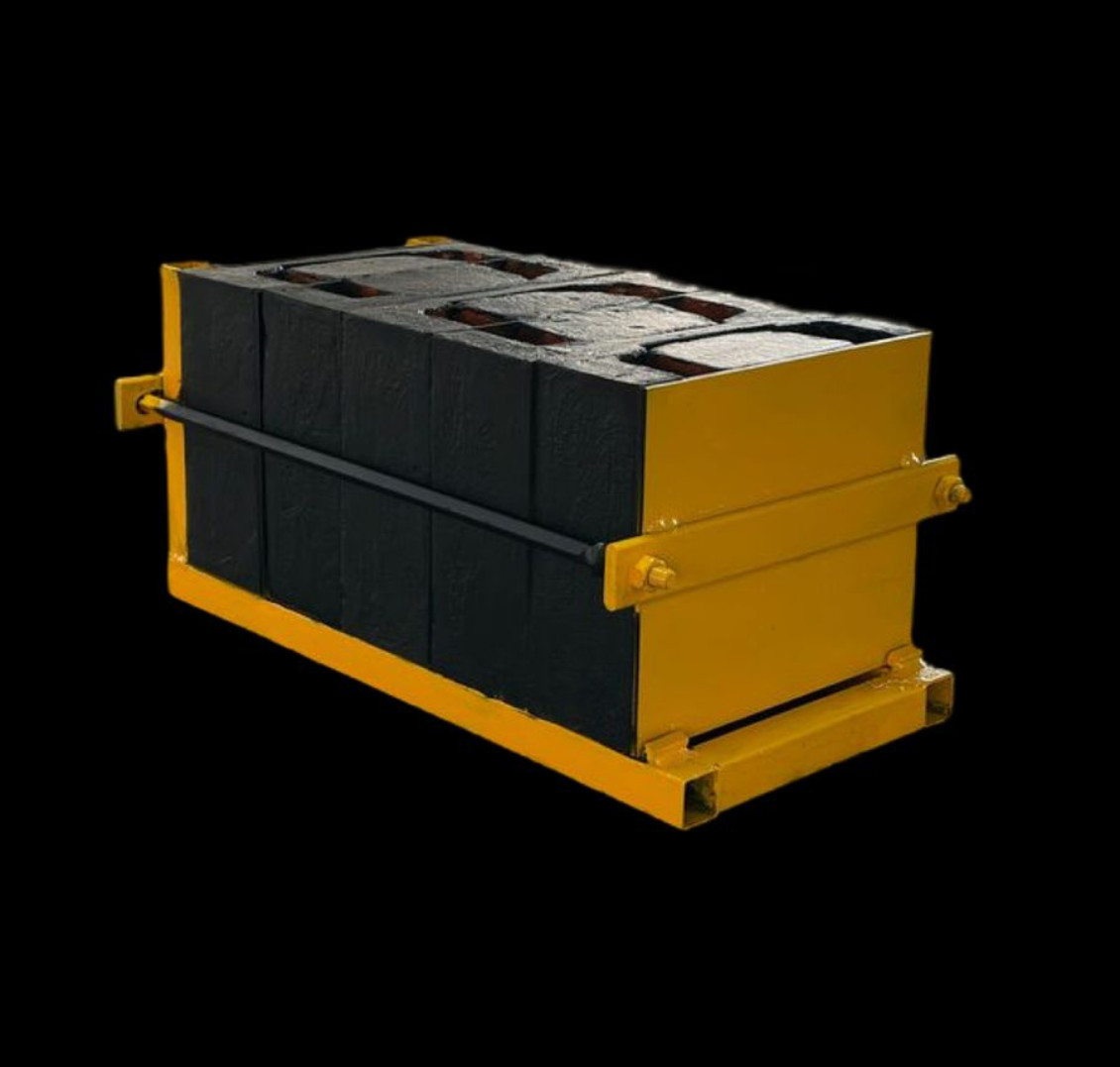
The fix is process, not force. Give the cast time to release, follow the demolding sequence the mold was designed around, and lift through the intended points. Any need for prying signals that cure time, release coverage or mix stiffness is wrong upstream. Our mold systems are liner-free and built to release fast for this reason.
Vibration, mix aggressiveness and cure heat
Excessive vibration shortens mold life because it drives sharp aggregate against the urethane under pressure, lapping the texture away from the inside. Vibration is necessary for consolidation in wet cast work, but intensity and duration beyond that buy nothing and cost detail.
Mix design contributes twice over. Sharp, angular aggregate is mechanically harder on the surface than rounded aggregate of the same size, and high cement content plus chemical admixtures — accelerators in particular — raise the chemical aggressiveness of what sits against the urethane during cure. Standard precast mixes work on these molds without special formulation; chasing turnaround with admixtures trades mold life for cycle time.
Heat magnifies both. Elevated cure temperature, from accelerated curing or a hot yard, speeds up chemical attack at the face and softens the urethane while it is under load, so an accelerated-cure line should inspect its faces accordingly.
Cleaning: what solvents and scrapers actually do
Aggressive cleaning ends more urethane faces than casting does, because solvents and metal tools remove surface material directly instead of wearing it slowly. Wire brushes, scrapers and chisels cut texture out of the mold, and once detail depth is gone nothing brings it back. Strong solvents are the less obvious hazard: many swell or soften urethane on contact, and the damage often shows only when the next cast picks up a dull patch.
Clean with plastic or wooden scrapers, soft brushes and water, and clean promptly — fresh residue lifts easily, cured build-up invites force. Build-up in deep texture is a warning sign, not a cleaning problem; it usually means release coverage there is short. Our FAQ covers setup and maintenance, and any new chemical should be cleared first.
Storage: UV, heat, stacking and deformation
Molds die between pours as often as during them. Ultraviolet exposure embrittles urethane at the surface, so a mold stored outdoors in direct sun ages even when it is not casting. Store it under cover, out of sunlight and away from heat sources.
Load is the second storage problem. Urethane takes a set under sustained pressure, so a mould stacked under weight or resting on an unsupported span holds that deformation, and the distortion shows up as out-of-tolerance panels rather than visible damage. Store faces supported flat and evenly, and clean them before storage — residue has the whole idle period to bond, and removing it later takes exactly the cleaning that shortens mold life.
What end of life looks like — and what the steel frame changes
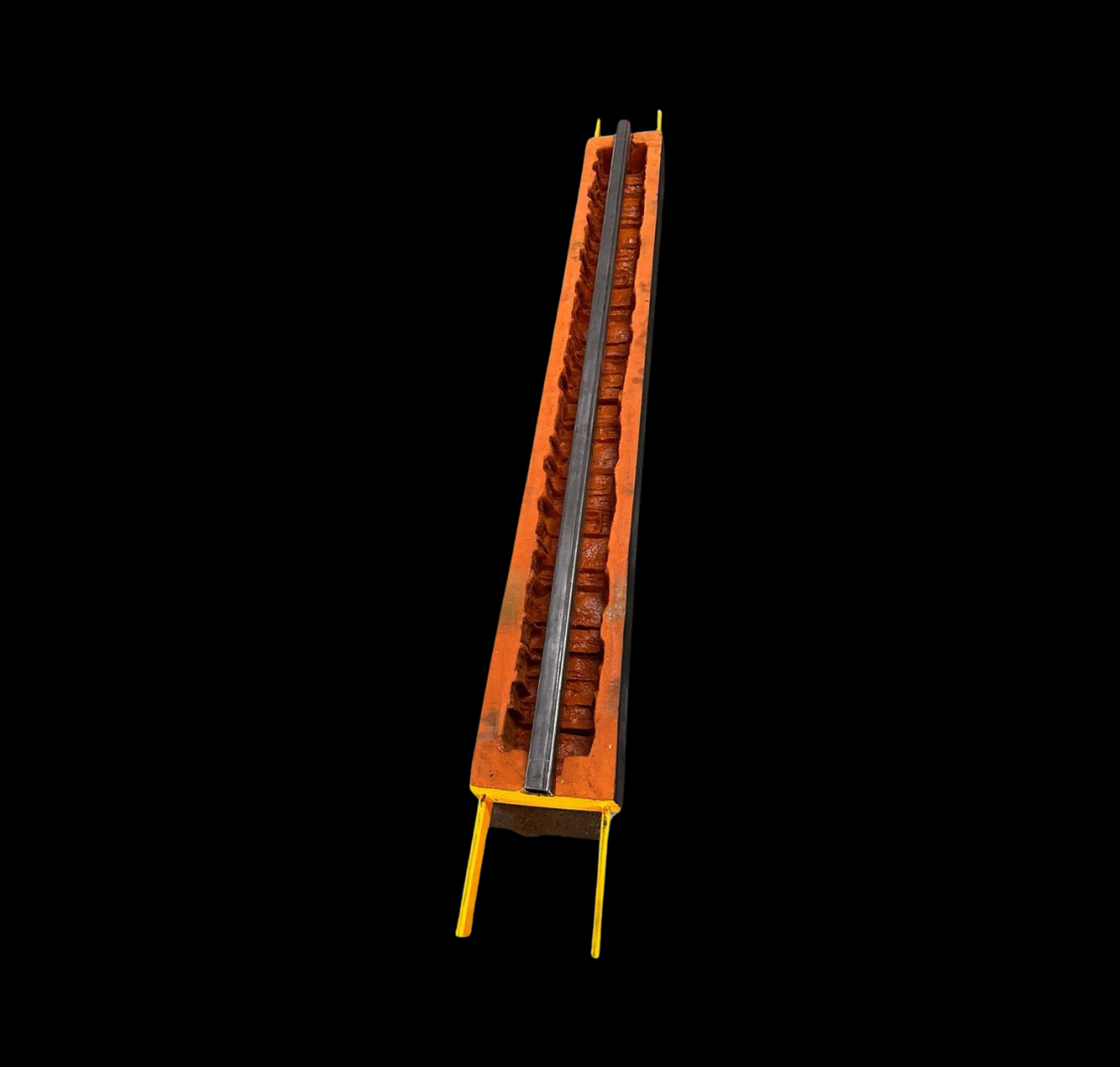
A urethane mold face almost never fails structurally. It goes out of service because the product stops looking right: fine detail softens, sharp arrises round over, texture flattens, and panels show a sheen where they used to show grain. The mold still casts a sound, dimensionally correct panel — it just no longer casts a convincing stone or woodgrain one. That is the real end-of-life signal.
Catch it with a reference, not with memory. Photograph a panel from a new mold under consistent lighting and compare current output against it: gradual detail loss is nearly invisible cast to cast and obvious against a baseline. Localised damage — a tear, gouge or soft spot — is a different signal, and should be raised at once because damaged areas concentrate release problems and spread.
This is where a urethane face encased in a steel framework changes the economics: wear surface and structural frame are separate concerns, so the steel holds dimension, squareness and rigidity while the urethane does the texture work. Where a part needs maximum rigidity rather than fine texture, steel moulds for precast concrete are the better answer. We would rather talk through your production conditions than quote a number that will not survive contact with your plant — get in touch, or read more on molds for precast concrete.
Frequently asked questions
How long do polyurethane concrete molds last before the face needs replacing?
There is no single honest figure, because cast life on a urethane face is determined by production conditions rather than by the mold alone. Release agent discipline, demolding technique, vibration exposure, mix aggressiveness, cleaning method and storage all consume the face at different rates. The practical approach is to define your own end-of-life standard from how much fine detail your finished product must show, then track output against a baseline panel.
What damages urethane molds the most?
Inadequate or incompatible release agent and prying during demolding do the most damage to a urethane mold face. Poor release lets concrete bond to the surface and tear material away at every cast, while a pry bar concentrates force in one spot and gouges the texture instantly. Aggressive cleaning with solvents or metal scrapers is a close third, because it removes face material directly.
Why did my mold lose detail?
Progressive loss of fine detail on a concrete mold is surface wear, usually caused by insufficient release agent, over-vibration, sharp aggregate, or cleaning with metal tools. It is cumulative and cannot be reversed once texture depth is gone. If the loss is patchy rather than even, the cause is almost always uneven release agent coverage in deep texture areas and inside corners.
How do I extend the life of a concrete mold?
Standardise release agent application so coverage is complete and consistent, eliminate prying and impact from the demolding routine, limit vibration to what full consolidation actually requires, and clean with plastic or wooden tools and water rather than solvents or wire brushes. Store molds indoors, out of direct sunlight, supported flat with no stacking load on the casting face. These practices cost almost nothing and control most of the variance in mold life.
Can a damaged urethane mold face be repaired?
Localised damage such as a tear, gouge or soft spot should be reported to the mold manufacturer as soon as it appears, because damaged areas trap concrete, worsen release problems and spread. Whether it can be repaired depends on the size, depth and location of the damage and on the texture involved, so it is assessed case by case. In a urethane face encased in a steel framework, the wear surface is separate from the structural frame, so surface damage does not necessarily condemn the tool.
Talk to our team
Send us your panel design, production volume and cycle targets and we will recommend a mold configuration and concrete mix to match. Or browse the full mold system range and fence designs.
Contact Elastoquip