
Molds for Precast Concrete: Precast Concrete Molds & Panel Mold Systems
Molds for precast concrete: panel, wall and architectural types, wet cast versus steel tooling, and liner-free custom forms built to your own drawings.
Molds for precast concrete are the reusable forms that shape wet concrete into finished panels, posts, walls, and architectural elements before it cures. Elastoquip is a manufacturer of precast concrete molds and complete mold systems built for producers who need repeatable dimensional accuracy across thousands of casts.
Architectural Precast Concrete Panel Molds
Our architectural precast concrete panel molds and precast concrete wall panel molds produce large-format facade, cladding, and fence panels with crisp edges and consistent surface texture. Because a precast mold is used cast after cast, tight tolerances and a clean release face are what keep a production line profitable — and that is what the Elastoquip system is engineered to hold.
Precast Concrete Forms & Molds by Product Type
On a plant floor forms and molds mean the same tool. Precast concrete forms, precast concrete forms molds and concrete casting forms all describe the reusable tooling that shapes the pour and holds it until it cures. What actually changes between jobs is not the word but the product family the form is built around.
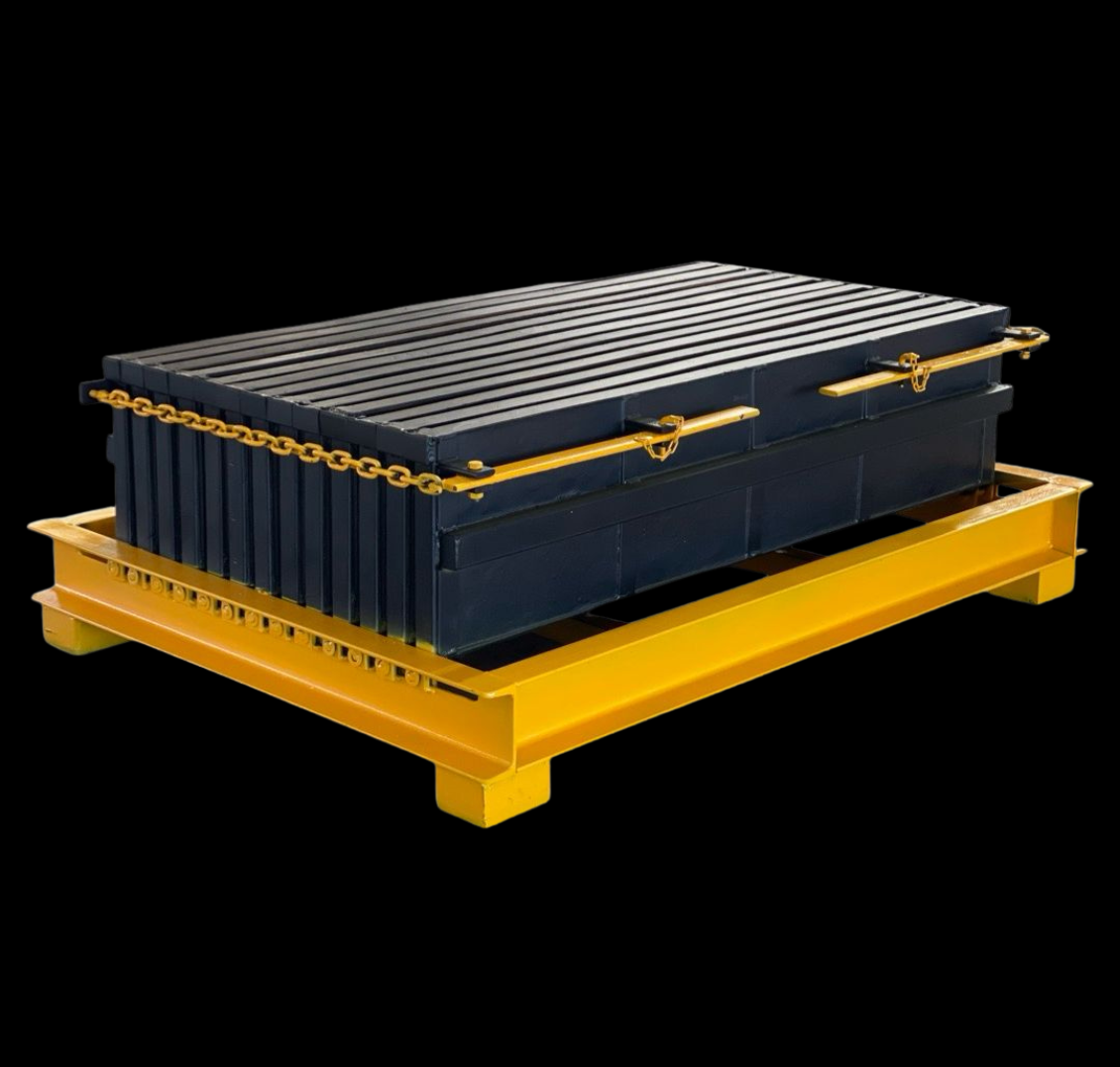
- Wall and fence panel forms — flat, large-format precast concrete wall panel molds for cladding, screening and decorative fence runs. This is the highest-volume category and the one Elastoquip tools as a standard system, including the 12-Panel Gang Mold.
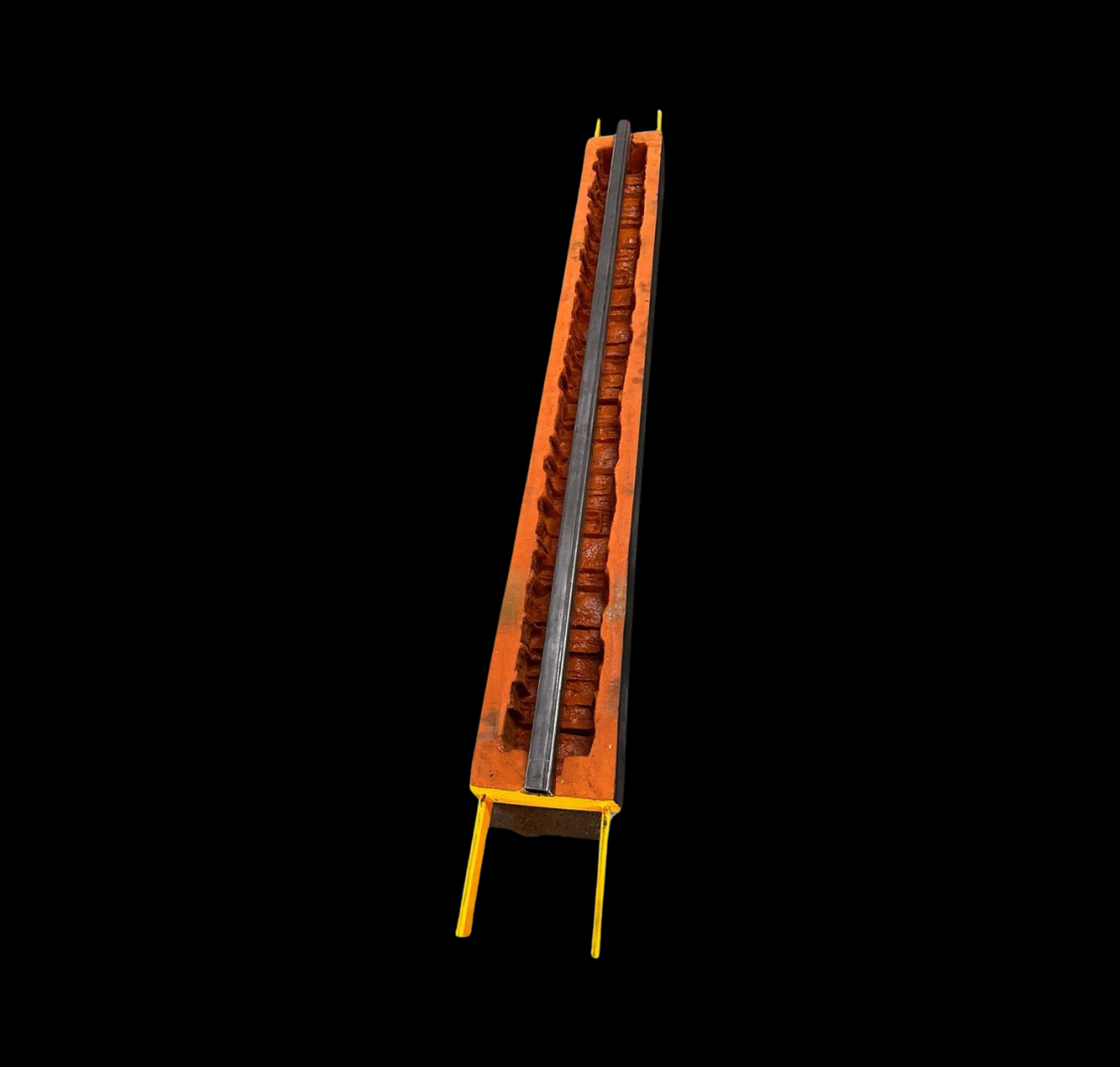
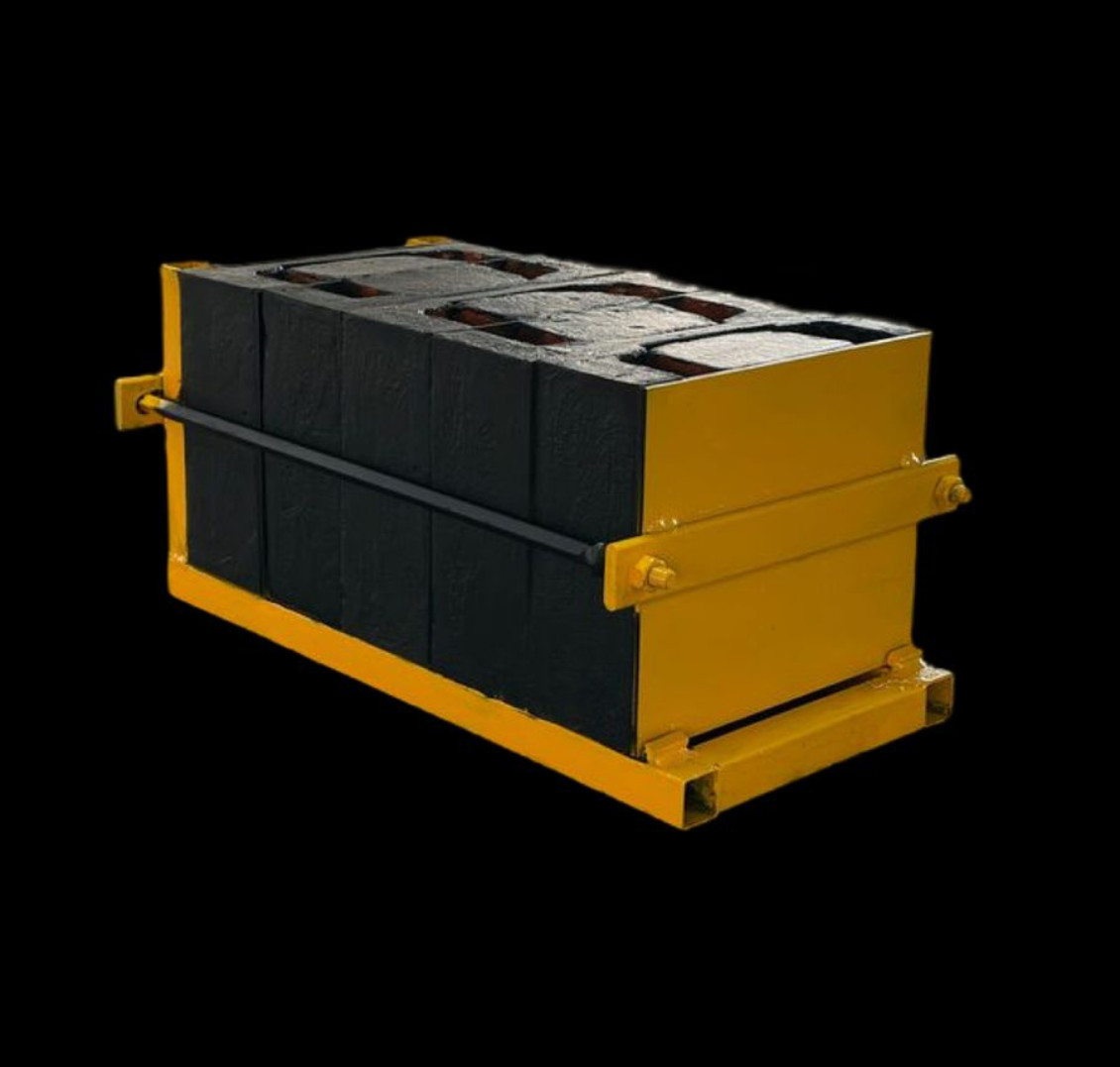
- Post, rail and cap forms — the parts that finish a wall. Line, corner, T-post and end post molds, plus rail and cap tooling, cast to the same texture as the panel so the run reads as one system.
- Linear and structural forms — beams, lintels, sills and curbs. Precast concrete beam molds and similar linear tooling are specified for rigidity and dimensional hold rather than surface detail, which usually points to a steel form.
- Box and trench sections — drainage, utility and chamber units cast as closed or open profiles.
- Architectural mouldings and trim — cornices, banding, quoins and column covers, where the finish is the product and the form face has to carry the detail.
Elastoquip tools the fence and wall panel families as a standard range and builds the rest as custom precast concrete mold forms to a producer's own drawings. If a form type is not in the standard catalog — a specialty profile, a modular wall panel for panelized housing, a one-off architectural shape — send the drawing rather than assuming it cannot be built.
Wet Cast, Polyurethane & Steel Precast Molds
Different products call for different mold materials. Wet cast molds and precast molds made of polyurethane capture fine stone and woodgrain detail for decorative work, while steel moulds for precast concrete give maximum rigidity and cast life for structural elements and precast concrete mouldings. Elastoquip helps producers match the right form material to the part.
Custom Precast Concrete Mold Forms
Beyond standard panels, we build custom precast concrete mold forms to a producer's own drawings — specialty profiles, trench and box sections, caps, and one-off architectural shapes. As a manufacturer of precast concrete moulds, Elastoquip supports the full range from decorative fence panels to engineered structural forms.
Precast Concrete Moulds: Supply Outside the United States
Outside North America the same tooling is spelled mould, and a producer searching for precast concrete moulds or moulds for precast concrete products is describing exactly what is on this page. Elastoquip is a manufacturer of precast concrete mould systems in the literal sense: the company builds in the United States and in South Africa, and ships to North America, Africa, Europe and beyond.
That second manufacturing base is a commercial fact, not a marketing one. For a producer in South Africa, the Gulf, Australia, Ireland or the UK, buying precast moulds from a supplier with a footprint on more than one continent changes freight cost and lead time, not just the invoice total. Ask any precast concrete mould manufacturer where the tool is physically built, and get lead time in writing, before comparing quotes.
The specification does not change with the spelling. Elastoquip concrete precast moulds are liner-free and fully self-contained — the face that produces the texture is the mould, so there is no separate liner to buy, align or replace — and standard precast mixes work without a proprietary admixture package. For fine precast concrete mouldings and decorative faces the urethane tool reproduces stone, brick and woodgrain detail straight off the mould surface; for structural work, steel gives the rigidity. Our guide to choosing a precast concrete mold manufacturer sets out the questions worth putting to any supplier, wherever it builds.
Why Manufacturers Choose Elastoquip Precast Molds
Precast producers choose Elastoquip precast molds for durability, fast cycle times, and consistent demolded quality that reduces scrap. Explore the complete lineup on the Mold Systems page, or contact our team to spec molds for precast concrete for your operation.
Frequently asked questions
What is the difference between precast concrete forms and precast concrete molds?
There is no practical difference — producers use “forms” and “molds” interchangeably for the reusable tooling that shapes a precast element and holds it until it cures. “Forms” is heard more often for linear and structural work such as beams, curbs and box sections, and “molds” more often for panel and architectural work where the face carries texture, but both describe the same category of tool.
Does Elastoquip supply precast concrete moulds outside the United States?
Yes. Elastoquip manufactures in both the United States and South Africa and ships precast concrete moulds to North America, Africa, Europe and beyond, so producers outside North America are not buying from a single-continent supplier. The specification is identical to the US range: liner-free, self-contained moulds that run on standard precast mixes.
What types of precast concrete molds does Elastoquip make?
The standard range covers the fence and wall panel families — the 12-Panel Gang Mold for double-sided panels, the Post and End Post Mold, the Panel Rail Mold and the Post Cap Mold. Beyond that, Elastoquip builds custom precast concrete mold forms to a producer's own drawings, including specialty profiles, trench and box sections, caps and one-off architectural shapes.
Are precast molds made of polyurethane or steel?
Both are used, and the part decides. Polyurethane and urethane mold faces reproduce fine stone, brick and woodgrain detail directly off the mold surface, which is what decorative and architectural work needs. Steel moulds for precast concrete give maximum rigidity and cast life for structural elements. Elastoquip's fence molds are proprietary high-grade urethane encased in a steel framework, which pairs the texture reproduction of urethane with the dimensional stability of steel.
Talk to our team
Send us your panel design, production volume and cycle targets and we will recommend a mold configuration and concrete mix to match. Or browse the full mold system range and fence designs.
Contact Elastoquip